Where the Six Weeks Go: The Real Cost of the Traditional Patent Workflow
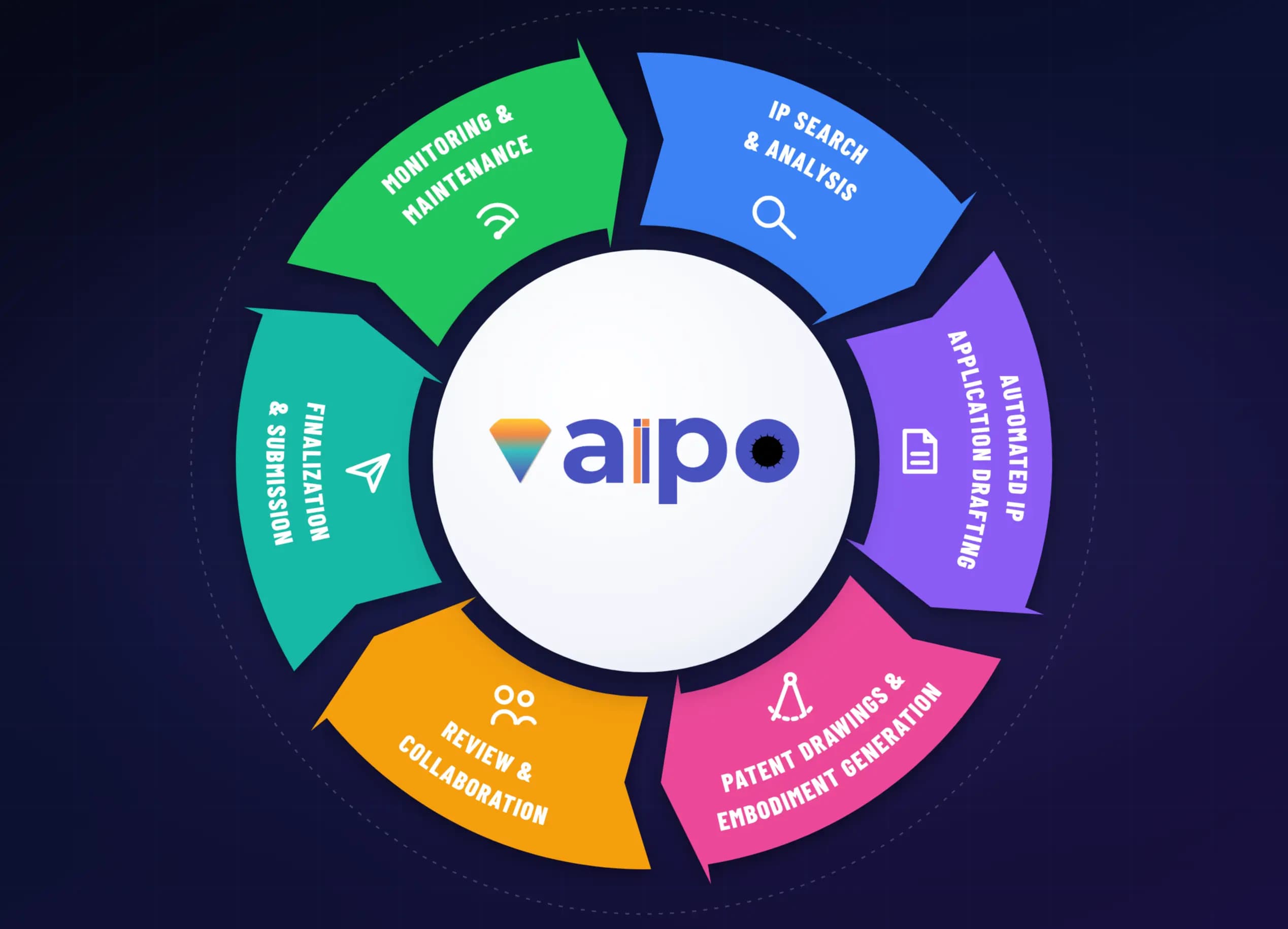
The first piece in this series argued that innovation, protection, and operation only function as a closed loop, that protection cannot lag months behind invention without leaving a company exposed. The place that lag shows up most concretely is the roughly six weeks that typically pass between deciding an invention is worth protecting and actually filing it. That gap is not empty time. It has a cost attached to it, and a chain of specialists behind it, both largely invisible until someone adds them up.
The traditional pre-filing process runs as a sequence of six handoffs, from the initial prior art search through final submission, each one gated on the last. Nothing here is broken exactly. Each specialist does their job correctly. The cost comes from the structure connecting them.
Six Stages, Six Handoffs
The stages themselves are familiar to anyone who has taken an invention through to filing. An attorney and engineer manually search global databases for novelty and freedom to operate, as a standalone exercise that has to finish before drafting starts. Engineers document the invention while attorneys draft the specification and initial claims, with several rounds passing before a workable draft exists. Technical drawings get handed to a separate designer, who has to interpret the claims from scratch and run their own revision cycles. The attorney then narrows claim scope against the prior art and negotiates language with the inventors, a stage where an overlooked reference can send the whole process back to search. An internal committee or legal leadership signs off, sometimes over several more rounds. Finally, the attorney assembles everything and runs a compliance check, where anything caught late reopens earlier stages and resets the clock.
Every arrow between these stages is a handoff, and every handoff means someone waiting on someone else's calendar, re-explaining context that lived mostly in the previous person's head, and a real chance the process loops backward instead of forward.
What Each Handoff Actually Costs
None of this shows up as a single invoice, which is part of why it is easy to underestimate. A prior art search alone runs $1,500 to $4,000 before anyone writes a page of the application. Drafting a non-provisional filing typically costs $6,000 to $15,000, and complex cases exceed $20,000. By AIPLA's own benchmarks, attorneys spend 25 to 40 hours per application, plus another $1,500 to $4,000 for each office action that follows. The figure that puts the rest in context sits downstream rather than upstream: the average cost of US patent litigation in 2024 was roughly $4.5 million, and how that case goes is largely a function of how well the underlying claims were scoped at the start.
Why the Bottleneck Is Structural, Not Personal
The instinct is to look for a slow link in the chain. That is usually the wrong place to look. Each stage in this process is gated, meaning nothing downstream can start until everything upstream is finished and signed off. A designer cannot begin drawings until claims exist to draw from. An attorney cannot finalize claims until the prior art search is complete. This is not a competence problem. It is an architecture problem: five or six skilled people working one at a time on a single deliverable, with the queue itself, not any individual's effort, setting the pace.
Errors compound the effect. A gap surfaced during claim review sends the process back to search. An objection raised during internal review can send it back to drafting. Each loop resets weeks of elapsed time, even when the actual hours of new work required are small.
Running the Same Work in Parallel
AIIPO does not remove any of the underlying work. Search, disclosure drafting, drawings, and review still happen, and a patent attorney still exercises judgment over claim scope and prosecution strategy. What changes is the architecture. These tracks run at the same time, in one governed workspace, informed by the same continuously updated patent intelligence, instead of waiting in a queue for the stage before them to finish.
In internal benchmarking of these same five core tasks, typical corporate pre-filing work that runs about eight weeks in sequence compresses to roughly a week and a half when it runs in parallel. That figure is illustrative, drawn from typical workflows rather than a guarantee for any specific filing, and it does not replace the review a qualified attorney should still apply. But it points to where the six to eight weeks actually go: not the difficulty of the work itself, but the queue built around it.
A closed loop between innovation, protection, and operation depends on protection moving at roughly the speed invention does. A structure where five specialists work in sequence on one deliverable was never built for that speed. It was built for a slower one.
Published by AIIPO, an AI-supported intellectual property orchestrator built by EneIT Solutions LLC.