Why Intellectual Property Protection Matters in a Fast-Moving Market
Kodak did not lose its business because it failed to invent digital photography. It held patents on the technology years before anyone else took it seriously. Nokia did not lose the phone market for lack of engineering talent. Both companies had the ideas. What they lacked was a plan for the next step, an ability to move whatever they had invented into something the company could actually hold onto once the market noticed.
That gap matters more today than it did then. A team with a decent idea and a laptop can now reach customers anywhere without a factory, a distribution deal, or a regional office. Uber built a global logistics business without owning cars. Airbnb rebuilt hospitality without owning buildings. Anthropic went from nothing to a serious competitor in AI within a few years. None of this happened because barriers to entry vanished entirely. It happened because the specific barriers that used to protect slow-moving incumbents, manufacturing scale, retail relationships, geographic reach, stopped being enough on their own.
Market Dominance Is No Longer Permanent
Which raises the real question companies keep getting wrong: being first with an idea is not the same as owning it. Once something ships, whether it is a product, a technique, or a piece of branding, competitors can study it. They can reverse engineer it, copy the parts that work, and skip the years of trial and error that got you there. If nothing stands between your invention and someone else's version of it, the market has no particular reason to reward the company that did the original work.
This is what intellectual property protection is actually for. A patent, a trademark, a trade secret, none of these stop competition. They draw a line around what a competitor is allowed to take.
Where Protection Usually Breaks Down
The harder problem is not understanding this in principle. It is doing it consistently, and most companies stumble in the same three places.
The first is timing. R&D teams move fast, and by the time someone gets around to filing, a competitor may already be sitting on a similar application, or the invention has already surfaced somewhere public. Most patent systems reward whoever files first, not whoever invented first, so delay is not a minor inefficiency. It is a real cost.
The second is fragmentation. As a company grows, its IP tends to scatter across product lines, business units, and legal jurisdictions, often with no single view of what is actually protected versus what has quietly expired or was never filed at all. Ask most mid-sized companies whether their current IP portfolio covers what they are shipping right now, and you will often get a pause before the answer.
The third, and the one that causes the most damage, is that protection usually sits apart from the rest of the business. Legal teams file patents. Engineering teams build products. These two groups frequently do not talk to each other closely enough for protection to keep pace with what is actually being built. By the time legal catches up, the product has already moved on, or the moment to file competitively has passed.
Innovate, Protect, Operate: One Loop, Not Three Jobs
The pattern underneath all three problems is the same. Companies treat innovation, protection, and operation as three separate jobs run by three separate teams, when they only work as a business strategy if they function as one continuous loop. You innovate. You protect what you built before someone else claims it. You operate the business with the confidence that what you are selling is actually yours to sell. Break the connection between any two of these stages and the value created upstream is left exposed downstream, no matter how good the original idea was.
How AIIPO Closes the Loop
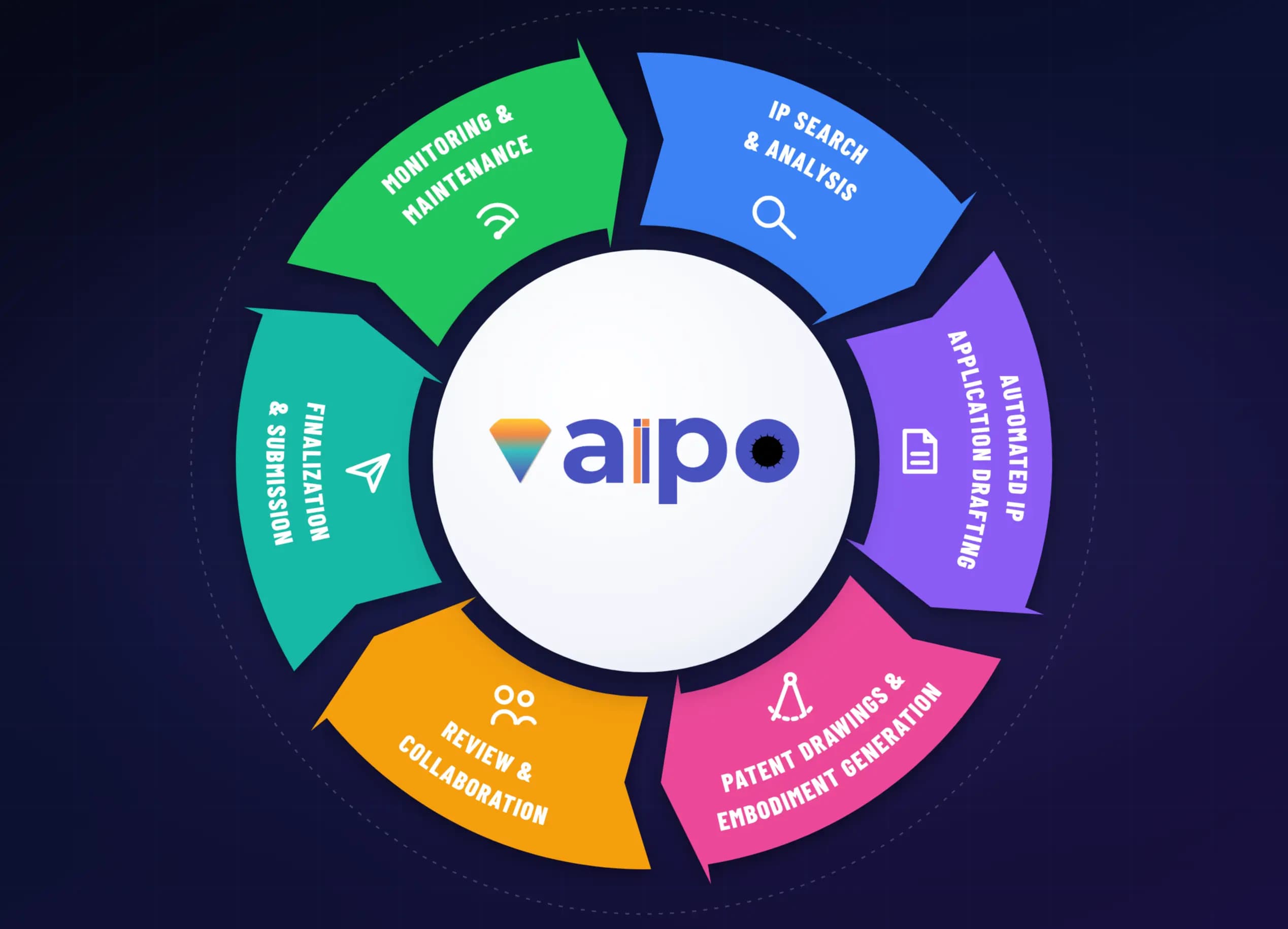
This is the specific problem AIIPO is built around. It is an AI-supported IP orchestrator designed to keep that loop closed rather than letting protection lag behind innovation the way it usually does. That means helping teams evaluate inventions and search prior art earlier, supporting the filing process so it does not stall behind legal bottlenecks, and giving operations a live picture of what the company's portfolio actually covers instead of a static file nobody has opened in a year. None of this replaces the judgment of a patent attorney. It closes the gap between the moment something gets invented and the moment it becomes something the company can actually defend and run a business on.
Kodak and Nokia were not short on invention. They were short on the connective tissue between inventing something and holding onto it once the world caught up. That connective tissue is what keeps a company's innovation from becoming someone else's product. It is also, increasingly, the difference between a company that stays ahead and one that becomes the next cautionary example.
Published by AIIPO, an AI-supported intellectual property orchestrator built by EneIT Solutions LLC.